Solid-State Batteries: the Next Big Leap
Every few years a technology appears that promises to "change everything". In the EV world that's solid-state batteries, and Chinese manufacturers are at the front of the race. Let's cut the hype: what they are, what they'll really deliver, and whether to wait.
What a solid-state battery is
In an ordinary lithium battery, ions move through a liquid electrolyte. In a solid-state one it's replaced with a solid. That changes three things:
- Higher energy density → more range at the same weight (potentially 1000+ km).
- Greater safety → no flammable liquid electrolyte, lower fire risk.
- Faster charging and potentially longer lifespan.
When to expect them
Chinese giants (including partners of BYD, CATL, NIO and others) are actively announcing pilot and semi-solid solutions. But mass, affordable production is a matter of several years, not "tomorrow". The first cars with these batteries will be premium and expensive.
Should you delay buying?
The short answer is no, because:
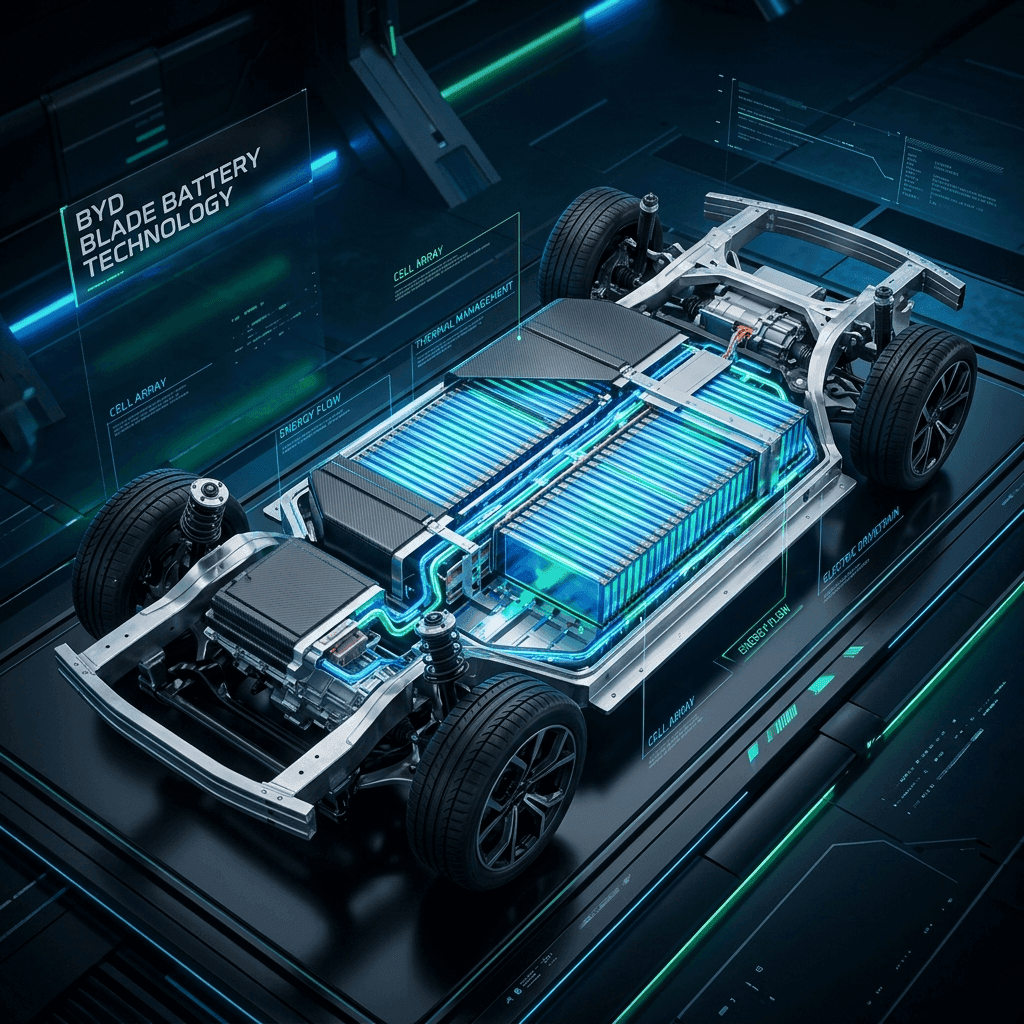
- Modern LFP batteries (like the BYD Blade) are already reliable, safe and give enough range for Uzbekistan (see the Blade battery guide).
- The first solid-state cars will be expensive and rare; you can wait for the "perfect" technology forever.
- Fuel savings and zero duty work for you right now.
Verdict
Solid-state batteries are a real and exciting future that will make EVs even better. But today's models already solve most buyers' needs in Uzbekistan excellently. Watch the technology, but don't postpone the benefit — current models are in the catalog.