Hybrid, EV or Petrol: How to Choose in 2026
Four powertrain types — four different wallets and scenarios. The nuance often missed: the powertrain directly affects clearance, and therefore the final price. Let's lay it out and give a simple decision framework.
The four options
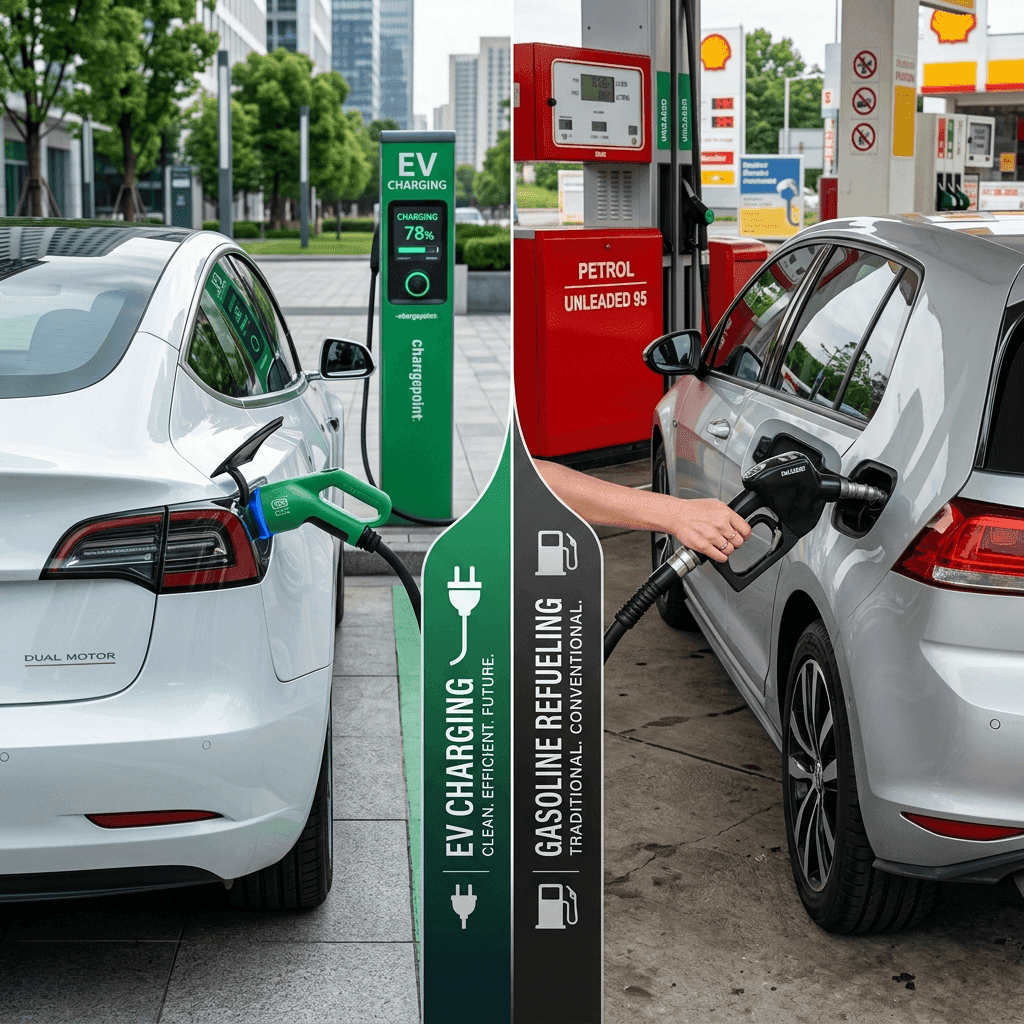
- EV (BEV): battery only. The cheapest "fuel" and maintenance, but you need charging.
- Plug-in hybrid / range-extender (PHEV / EREV): battery + engine. Charges from a socket but isn't dependent on chargers on a long trip.
- Regular hybrid (HEV): self-charging, no plug. Saves fuel, but it's still a petrol car.
- Petrol / diesel (ICE): familiar and independent, but pricier to run and clear.
The deciding factor — clearance
This is what changes the picture in Uzbekistan:
- EV and plug-in hybrid (PHEV/EREV): 0% duty + 12% VAT + recycling fee.
- Regular hybrid (HEV) and petrol: 15–40% duty by age (+ per-cm³ for petrol) + 12% VAT + recycling fee.
So EVs and PHEVs save thousands on duty. How the charges work is in the customs guide; a figure for your car in the calculator.
A simple decision framework
- City, home charging, want minimal cost → EV (BYD Seal, Dolphin, Atto 3).
- Lots of intercity driving, sparse charging → plug-in hybrid / range-extender (Li Auto) — also 0% duty, but no charging anxiety.
- Only want familiar petrol, economy doesn't matter → a petrol crossover (Geely Monjaro), but budget for higher clearance.
Verdict
In 2026 in Uzbekistan, an EV or plug-in hybrid is almost always better on the combined "clearance + running cost". Pure petrol makes sense only when you lack charging access and won't pay for it with attention. Compare full ownership cost in the EV vs petrol guide and choose in the catalog.