Where and How to Charge an EV in Uzbekistan
The main fear of a future EV owner is "where will I charge?". In practice 80–90% of charging happens at home, and the public network is mainly for longer trips. Let's cover both.
Home charging — the main method
The cheapest and most convenient option. A 7 kW (single-phase) or 11 kW (three-phase) wall-box is enough. The car charges fully overnight, and the night electricity tariff makes "fuel" several times cheaper than petrol.
Order the charger together with the car — it's cheaper than buying and installing it separately later.
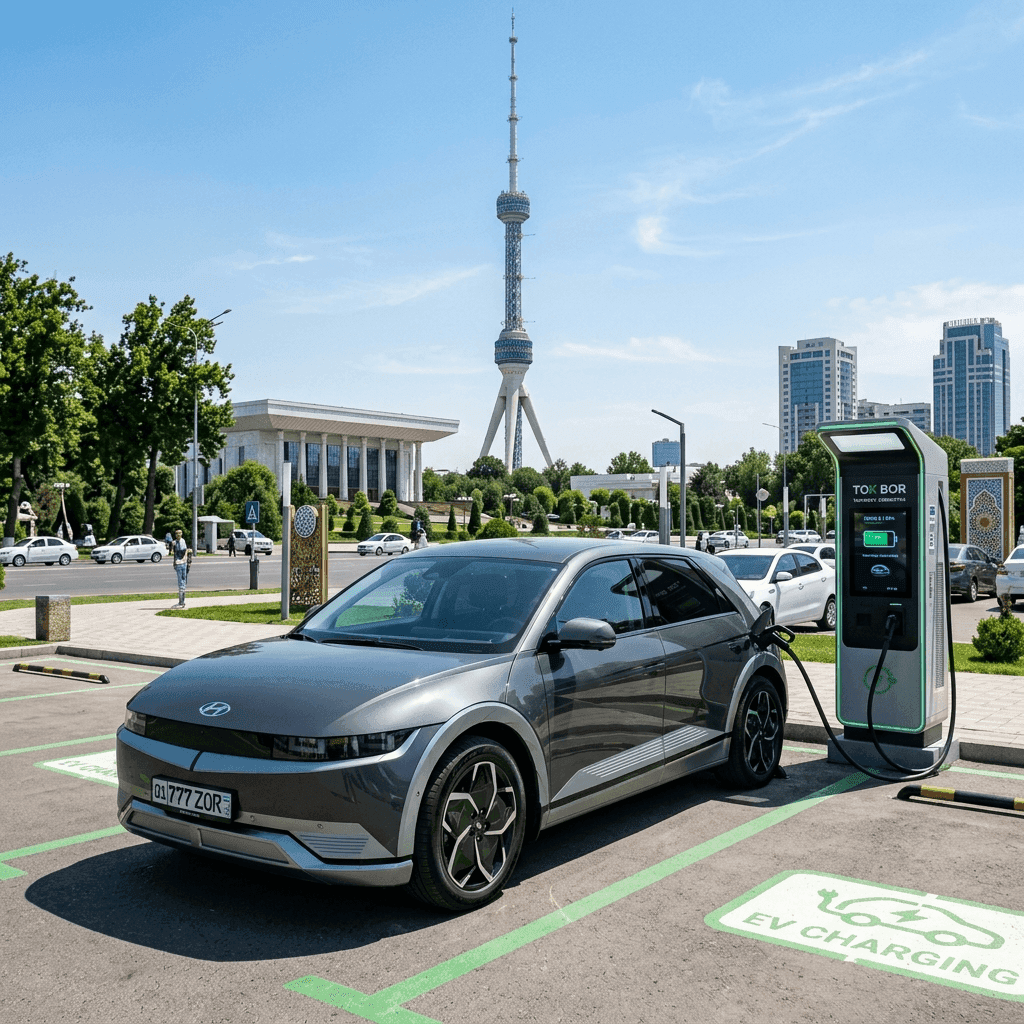
Public stations
Tashkent and larger cities have a growing network of AC (slow, up to 22 kW) and DC (fast, 60–120+ kW) stations — at malls, fuel stations and dealers. Fast DC charging adds 200–300 km in 20–40 minutes. For intercity trips, plan the route ahead: stations between cities are still fewer.
AC vs DC
- AC (alternating current) — slow charging for home and long stops.
- DC (direct current) — fast charging on the road; depends on whether the car supports a 400V or 800V architecture (Zeekr, for example, charges very fast).
Range planning
Real-world range is usually 15–25% below the CLTC rating, especially in winter and on the highway. For city use, 400 km lasts a week. More on winter in our winter operation guide.
Bonus: green plates
EVs in Uzbekistan get "green" plates and incentives, and the car itself is imported duty-free — details in the customs guide.
Choosing your first EV? Browse the catalog — we'll help with the car and the charging hardware.